Saana Nature Trail

This six-kilometre nature trail along the side of Saana offers diverse scenery and plenty to discover in varied terrain.
Kilpisjärvi offers many enjoyable day hikes beyond the popular routes to the summit of Saana and the trail through Malla Nature Reserve. One lesser-known route that deserves more attention is the Saana Nature Trail, which can be reached easily directly from the Retkeilykeskus.
The Saana Nature Trail is a six-kilometre partly circular route through varied fell landscapes. During July, the mountain birch forests at the beginning of the trail are at their greenest. Thanks to the lime-rich soil on Saana’s western slopes, the area is exceptionally lush compared to the surrounding Kilpisjärvi region and filled with diverse plant life.
Higher up, above the tree line, the terrain becomes harsher and more open. Still, in early summer the trail is decorated with many Arctic flowers, including alpine bearberry, mountain avens and Lapland anemones. By late July there are fewer flowers in bloom, but you may spot species such as moss campion along Saana’s slopes.
You can start the nature trail either from the Retkeilykeskus or from the parking area at Malla Nature Reserve. This time we began our hike from Kilpisjärvi Retkeilykeskus, where we enjoyed a delicious lunch before setting off.
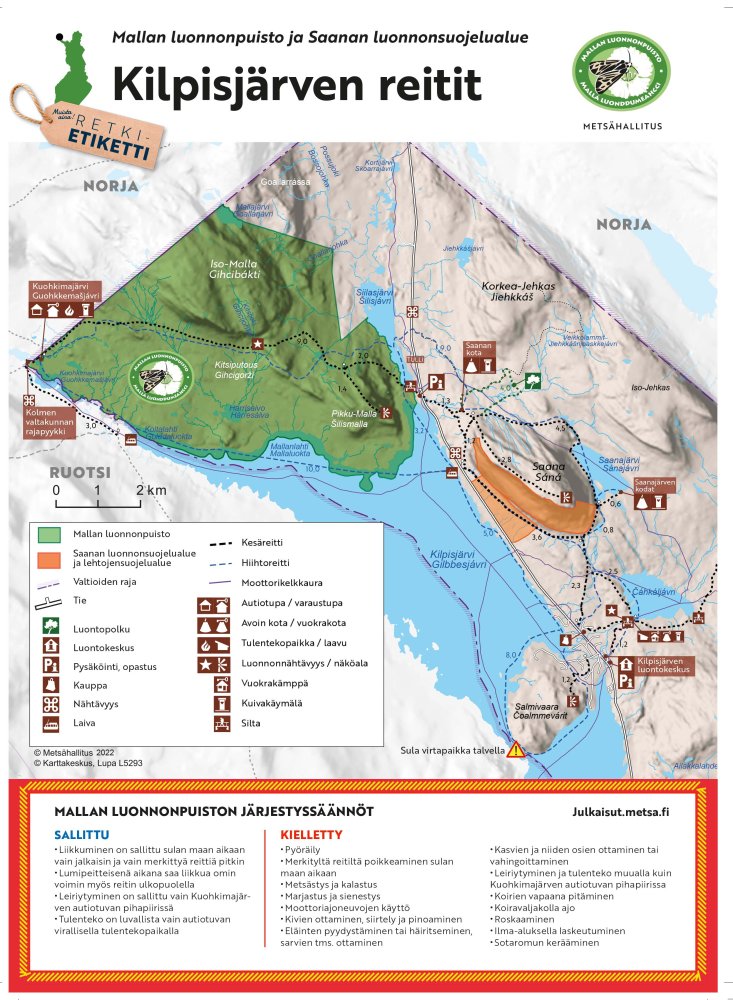
The first kilometre differs depending on whether you begin from the Retkeilykeskus or from the Malla parking area. After that, the routes merge and continue along the same circular trail. The nature trail is signposted to be walked counterclockwise, although we accidentally ended up hiking it the other way around. The beautiful scenery distracted us, and before we realised it, we had walked straight past the first turn!
In the Metsähallitus map below, the nature trail is marked in green.
It was a perfect day for hiking. The sun appeared now and then from behind the clouds, the temperature hovered around 14°C, and a pleasant breeze kept the mosquitoes and black flies completely away.
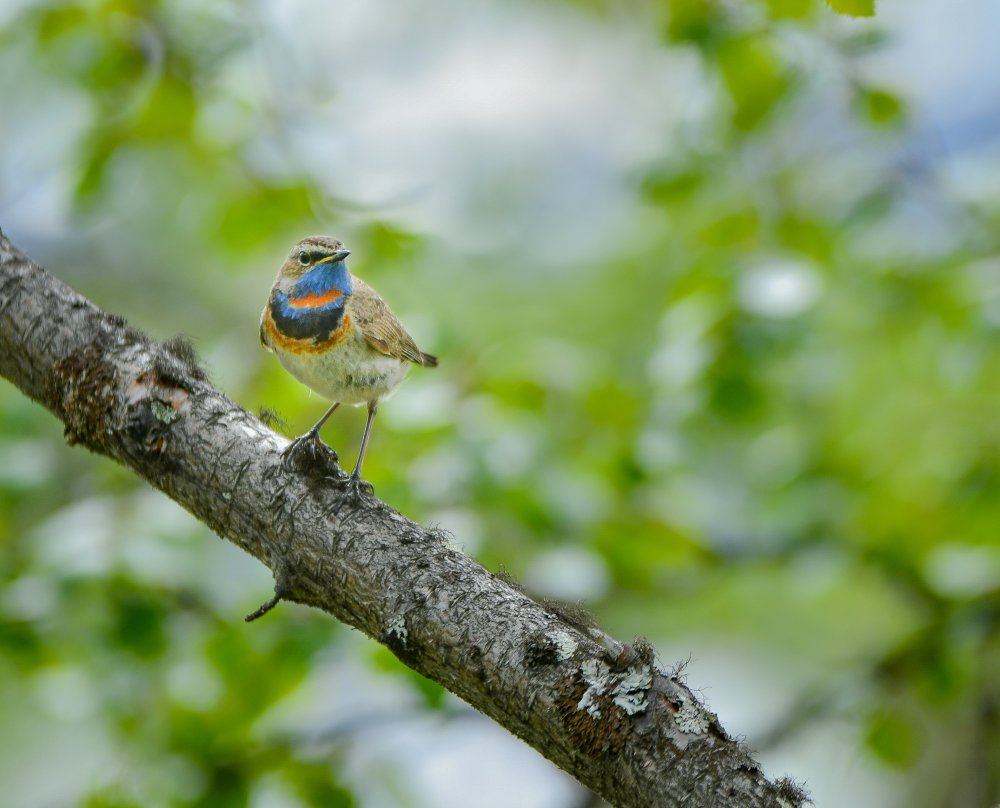
Almost immediately in the mountain birch forest, we came across a magnificent male bluethroat. Bluethroats can be both seen and heard throughout Saana’s birch forests, and these birds — the regional bird of Lapland — nest here in greater numbers than anywhere else in Finland.
In July, you may also spot young bluethroats with their mottled plumage, still moving somewhat clumsily compared to the adult birds. During August, most of Kilpisjärvi’s bluethroats begin their long migration to Southeast Asia, mainly to wintering areas in northwestern India and Pakistan.
The first kilometre from the Retkeilykeskus to Saanavanka — a plateau located above the tree line — follows the typical rocky terrain familiar to many trails in Kilpisjärvi. Water flowing down from Saana keeps this section of the trail consistently damp, so proper footwear is recommended. Waterproof trail-running shoes work particularly well on this route.
The gravel path starting from the Malla Nature Reserve parking area is easier to walk and generally much drier. Especially when hiking with children, this route is often the more comfortable option.
From Saanavanka, the scenery opens toward Lake Kilpisjärvi and Pikku-Malla. If you continue onward toward the summit of Saana, two more iconic fell peaks soon appear on the horizon: the shark-fin-shaped Barras in Norway and the sharp, distinctive summit of Pältsa in Sweden.
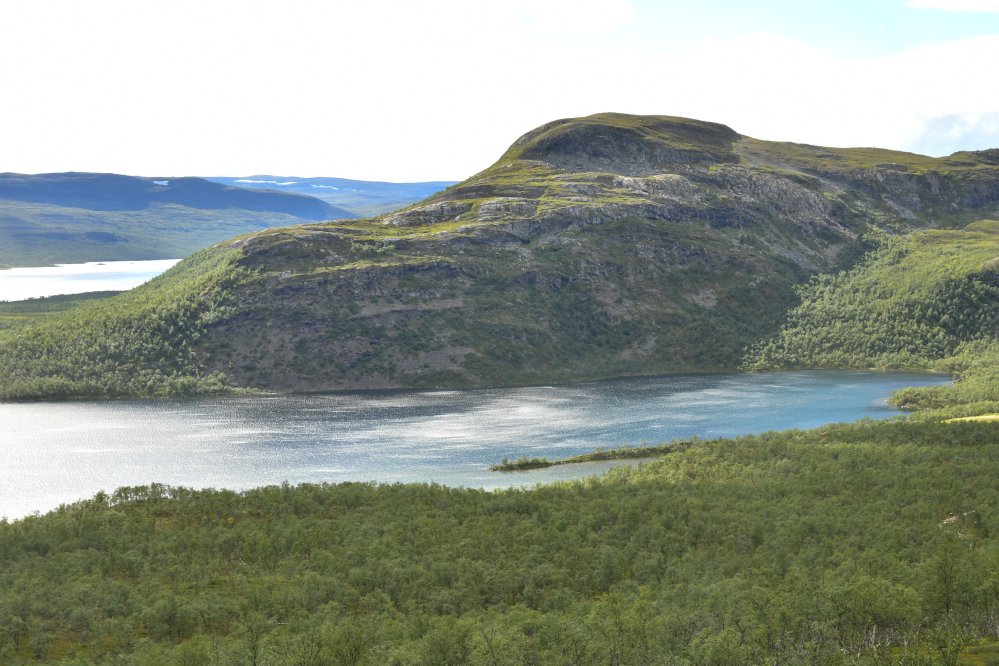
From Saanavanka, the nature trail normally continues toward Jehkas Fell when walked counterclockwise. However, without noticing, we missed the turn and continued straight toward Saana’s new wilderness hut.
The new hut, completed for the summer season of 2020, is a great place to take a longer break, enjoy a snack, or even light a campfire if you wish. Next to the hut, you’ll also find a firewood storage area and toilet facilities.
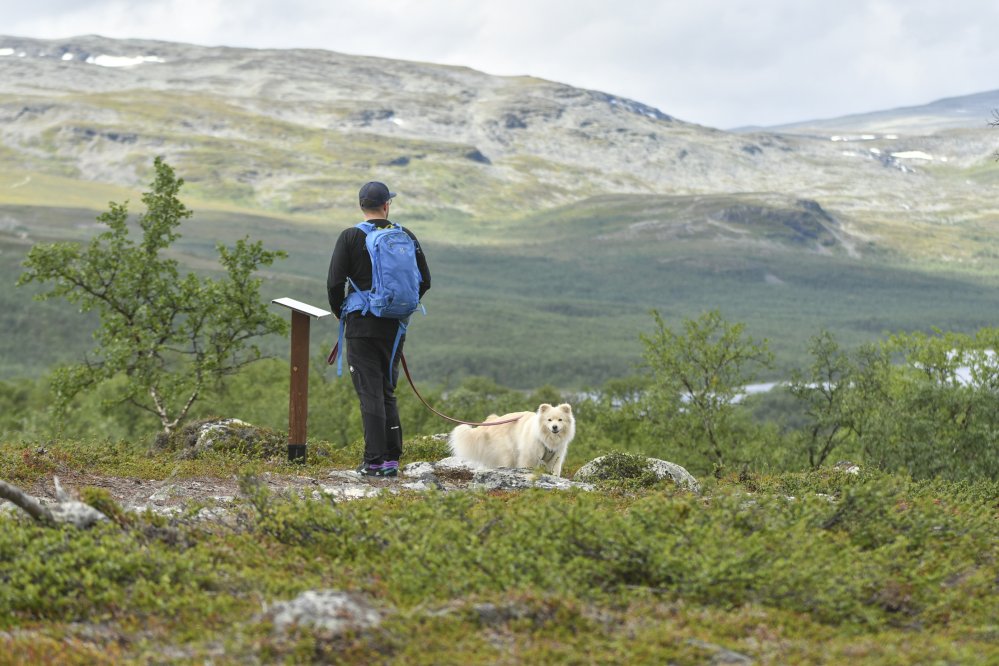
The information boards along the nature trail provide fascinating insights into the unique nature of Kilpisjärvi. This remote corner of the Käsivarsi is considered Finland’s only true mountain region, as the Scandinavian Mountains — also known as the Scandes — begin in southern Norway and extend all the way to the high fells of the Käsivarsi area.
These exceptional conditions create habitats for rare alpine plants and butterfly species that cannot be found anywhere else in Finland.
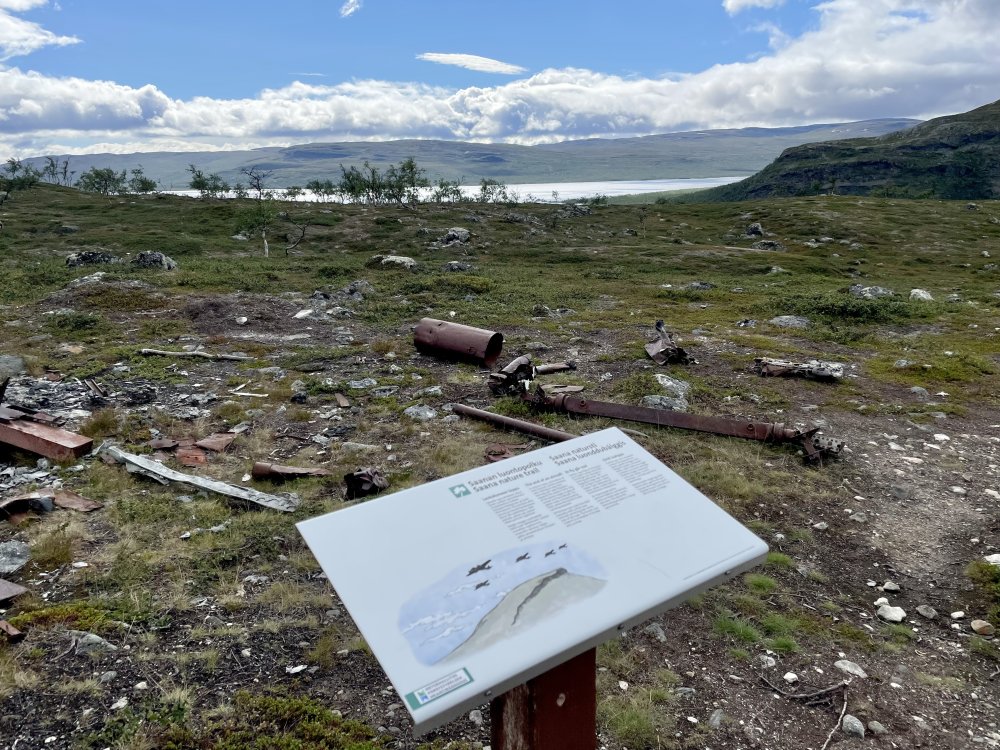
The traces of war can still be seen throughout the nature of Kilpisjärvi — including along the nature trail that winds across the slopes of Saana and Jehkas. One of the most fascinating sites along the trail is the wreckage of a German Junkers aircraft.
In October 1942, a formation of nine Junkers bombers was flying over Kilpisjärvi when one of the aircraft suddenly began trailing smoke. The plane attempted an emergency landing on the open fell plateau, but the descent was too harsh. The crash landing was witnessed by 12-year-old Urho Viik, who happened to be out hunting hares at the time — the grandfather of my hiking companion.
Two of the pilots later died from their injuries, but one survived and, with Urho’s help, managed to reach the roadside before being transported for treatment across the border to Norway.
Even today, the scars left by the explosion and fire can still be seen in the barren fell landscape. Recovery is slow here, as the growing season is shorter than anywhere else in Finland. Although most of the wreckage has been removed over the years, plenty of metal debris still remains at the site.
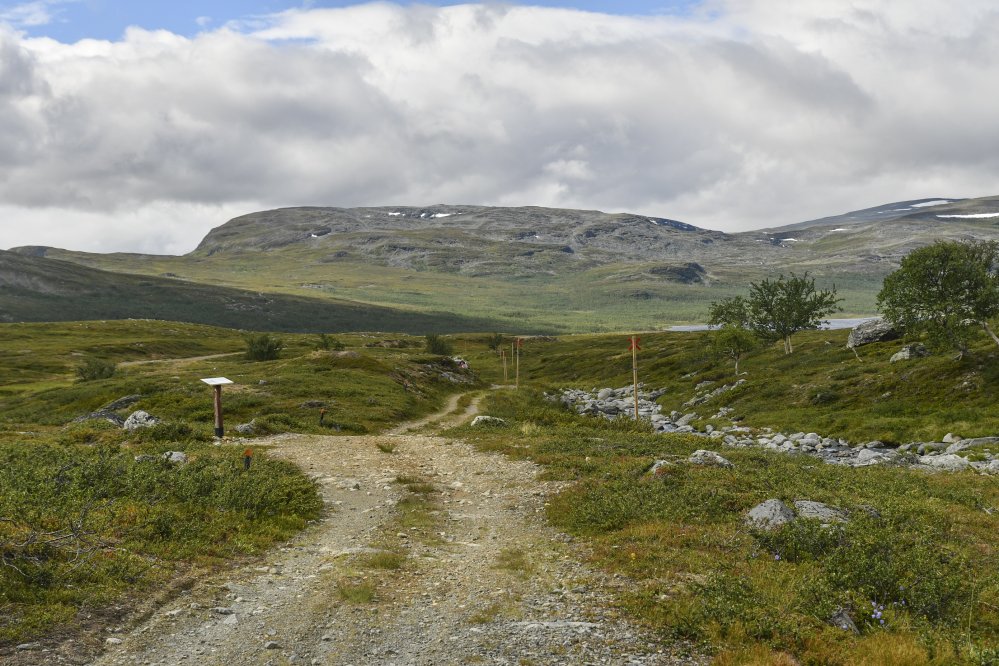
The next section of the nature trail also carries echoes of wartime history: the German supply road to Jehkas Fell, known locally as the German Road (Saksantie), built using prisoner-of-war labour.
This old road begins a few hundred metres from the Kilpisjärvi customs station in the direction of Norway and stretches for approximately 6.5 kilometres. Today, the German Road is considered one of the few routes in the area that is particularly well suited for mountain biking.
At this point, both the German Road and the nature trail follow the crystal-clear mountain stream Skirhasjohka. In July, the banks of the stream are brightened by countless alpine harebells blooming along the water’s edge.
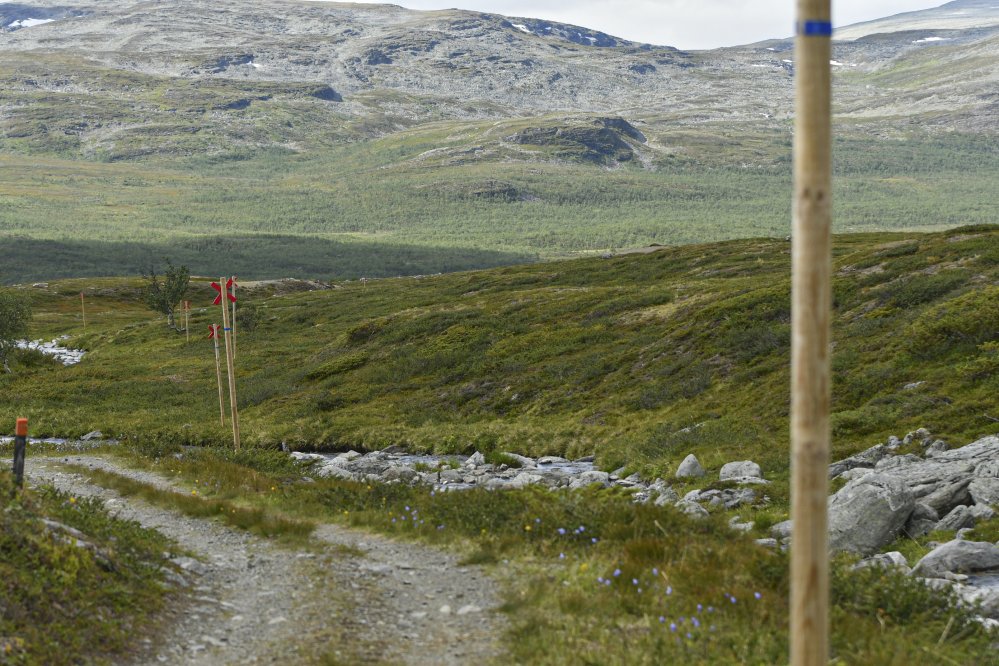
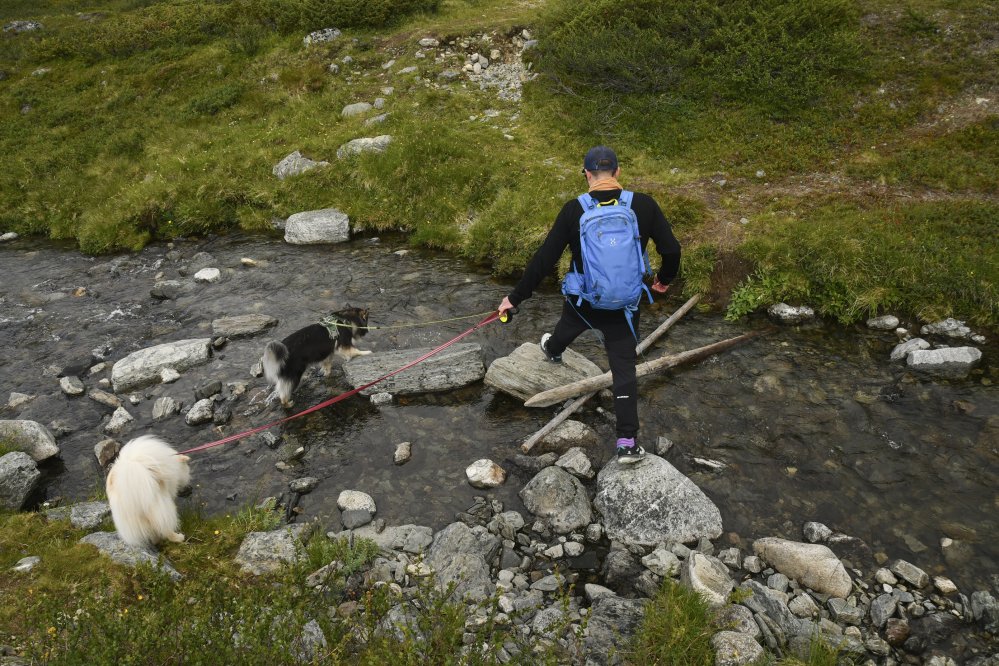
There are no bridges at all along the nature trail, and the route includes several stream crossings. In early summer, when water levels are high from snowmelt and flooding, these crossings can sometimes cause a bit of trouble. This time, however, we were able to cross the stream easily and didn’t even need to search for a suitable crossing point.
For our hiking companions Elsa and Lyyti, streams are always a welcome surprise. Finnish Lapphunds love drinking from the cold mountain waters, and a little wading offers refreshing relief from the summer warmth.
For many travelers accustomed to national parks and Lapland’s larger fell destinations, Kilpisjärvi’s remarkably untouched and rugged trails often come as a surprise. Yet in their own way, they fit perfectly here — in the wild fell landscape of Kilpisjärvi.
The nature trail follows the old German Road almost all the way to the highest point of the route, reaching an elevation of around 700 meters. After this, the trail turns toward the northern slope of Saana.
Up on the hillside, we thought we had reached roughly the halfway point of the route and decided it was time for a snack break. The wind on the fell was brisk enough that we easily finished an entire thermos of hot juice. As usual, the dogs enjoyed not only their own treats but also received their fair share of cheese from our sandwiches.
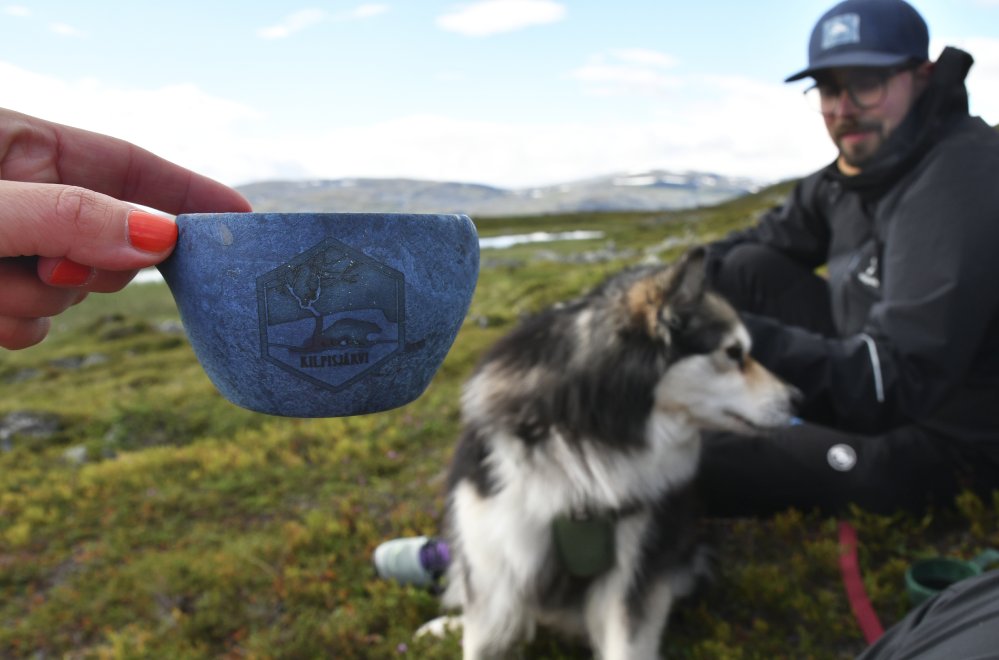
Thanks to the windy weather, there wasn’t a single mosquito or black fly on the fell. At times, especially in July, black flies in particular can ruin an entire hike, as they are able to reach even the skin of thick-coated dogs. On days like that, it’s best to avoid longer outings with your dog.
Our shop also carries natural products suitable for keeping insects away from dogs, including pine tar oil.
From our rest spot, we had a beautiful view toward the Malla Nature Reserve and all the way to the mountains of Norway. One of the special things about Kilpisjärvi is that you can admire the fells of three different countries from almost anywhere — the fells visible to the east of Kilpisjärvi are actually located in Sweden.
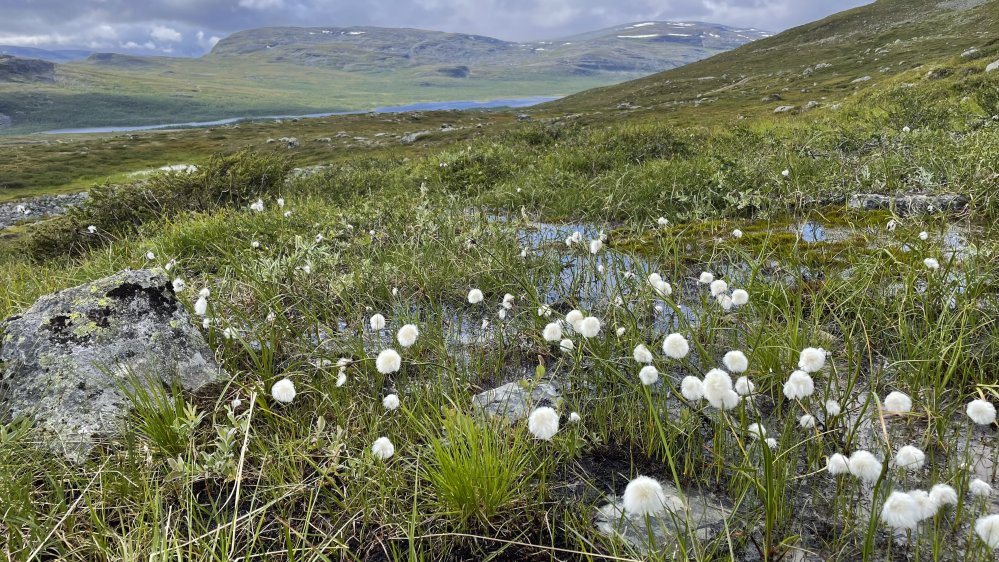
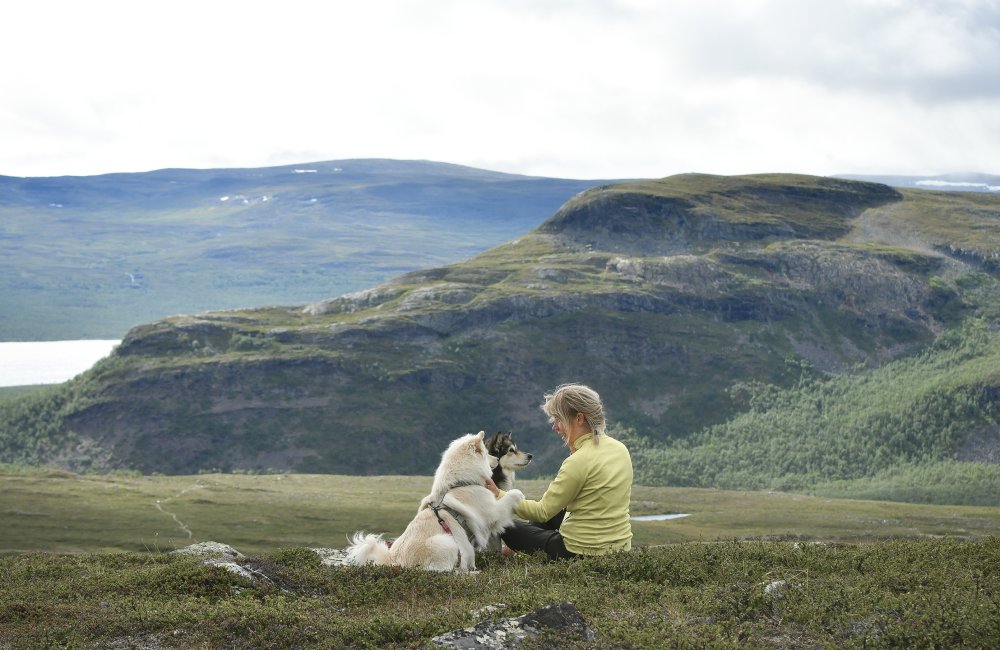
The most popular hiking routes in Kilpisjärvi are the Saana Trail, the Malla Nature Reserve, and the Tsahkaljärvi route. If you have ever visited the summit of Saana in July or during the autumn colors season, it is easy to get the impression that Kilpisjärvi’s trails are crowded with people. However, once you step away from these most popular routes, the fells quickly become remarkably peaceful.
The nature trail is also often overlooked by travelers passing through in a hurry, and on this hike we didn’t come across many people either.
We did spot around five reindeer along the way, although they ran off as soon as they saw us. I had hoped to capture a photo of tiny reindeer calves, but this time luck wasn’t on my side!
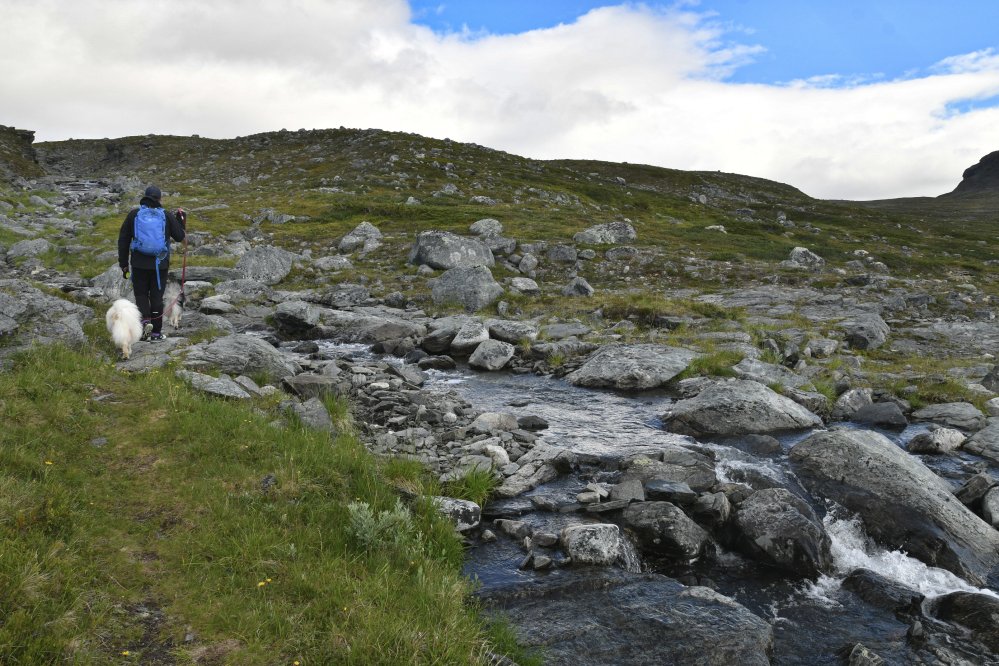
Higher up on the slope, you’ll come across another stream crossing, which this time was easy to pass without any trouble. It’s also worth following the rocky stream bank a little further uphill, as there are several small waterfalls along the way.
Lush green slopes of Saana and its dramatic cliff face. A man and two dogs crossing a stream.
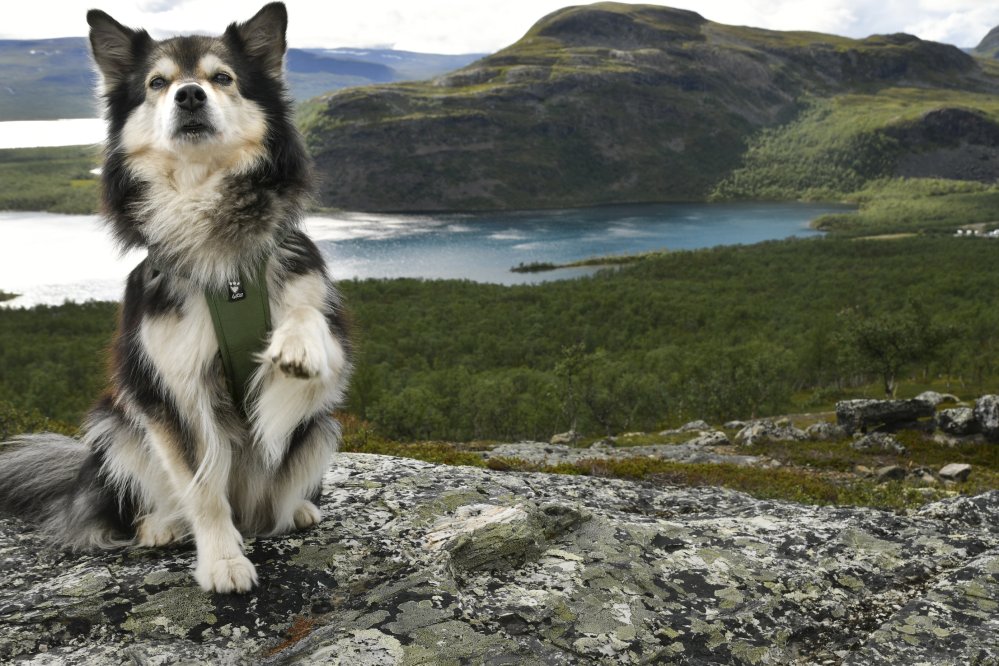
At this point, the nature trail is almost complete, and the route continues downhill through the mountain birch forest back toward the Retkeilykeskus. Elsa thoroughly enjoyed the mosquito-free hike — and especially the delicious snack break along the way!
Years ago, the route of the nature trail was slightly different and followed a longer section through the lower mountain birch forest. Along this former route, you can still find two memorials connected to Kilpisjärvi’s wartime history. If local history interests you, both memorials are easy to visit from a roadside stopping area, as they are located right beside the road.
One of the memorials tells the story of the “Great Explosion” of 1916, when Finnish Jägers blew up an ammunition depot belonging to the Russian Empire near Siilastupa.
The second memorial marks the end of the Lapland War, when the last German soldiers left Kilpisjärvi — and Finnish soil — on April 27, 1945. The date is still commemorated in Kilpisjärvi each year on Veterans’ Day at the Three-Country Cairn, including a ceremonial flyover by the Lapland Air Wing.
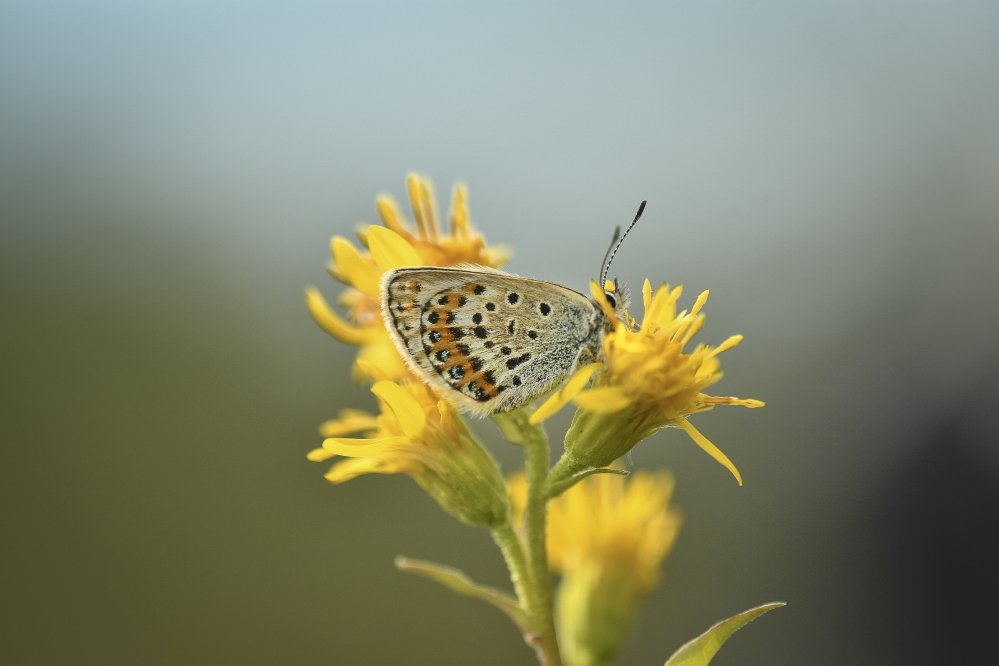
On our way back, the sun began shining through the clouds again, and dozens of blue butterflies fluttered among the forest vegetation. Altogether, the hike took us around three hours, mainly because of several photo stops and a break for snacks, though the trail can certainly be completed faster if you prefer a quicker pace.
The trail leading to the summit of Saana was crowded with hikers, but despite visiting during the busiest holiday season, we only encountered six people along the nature trail itself. If you’re looking for a more peaceful fell experience, this route comes highly recommended.
We wish you a wonderful hike — and if you decide to explore the nature trail, feel free to stop by our reception and tell us about your experience!
Comments
no-comments